Furnace Efficiency Tips – For You “Cool” Homeowners
A home furnace uses an extreme amount of energy, but properly operating and up-to-date equipment can reduce costs up to 20 percent annually. Replacing a furnace can be a large investment–one some homeowners can’t manage right away. By following a number of furnace efficiency tips, however, you can immediately boost your home’s heating efficiency at far less expense than a new heater.
5 Furnace Efficiency Tips Every Homeowner Should Know
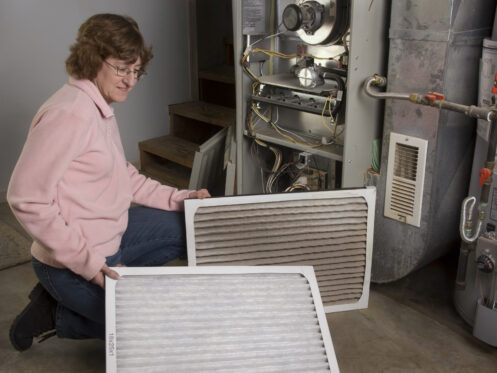
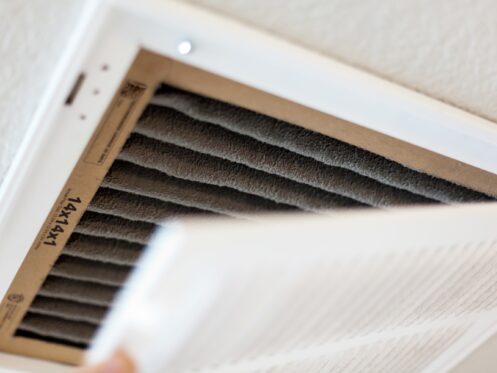
Change Furnace Filters
Changing the furnace filter is one of the easiest and least expensive ways to boost furnace efficiency. Make a habit of checking the furnace filter on the first of every month. If light it visible through the filter, it is still usable. However, with filters costing only about one dollar apiece, the best option is to start each month fresh and replace the furnace filter. Just $12 a year in new filters can save a lot on monthly furnace bills.
Lower Blinds = Lower Furnace Bills
Drapes and curtains can serve as additional insulation especially in winter. At night, close all the drapes and curtains to insure the cold air stays out. On days the sun does shine through, open the blinds to let the natural rays heat the home and give the furnace a break.
Supplemental Furnace Heat
There is nothing more favorable than clothes fresh out of the dryer on a cold day. Use heat-generating appliances to your benefit. Cooking and using the washer and dryer will help keep the family extra toasty without raising the thermostat or bill.
Eliminate Drafts
Ensuring that the entire home is well insulated, including all air leaks especially in the attic, will decrease heating costs by securing the warm air inside. This allows the furnace be more efficient and not work overtime to keep the house at a comfortable temperature.
Insulate Furnace Ducts
Far too often we overlook the garage because it is often not considered part of the house. Concerning your heating bill, however, this is simply not true. Because the garage is generally unheated the furnace ducts often are not wrapped or properly insulated. Unwrapped ducting in the garage will result in a significant amount of heat loss and unsightly furnace bills.
Rearrange the Furniture
Keep all vents and heat exchange locations clear from obstructions. Especially be mindful of couches, chairs and entertainment centers. Additionally make sure your drapes are not blocking the heat exchanges to allow good furnace air flow.
Thermostat Settings
Is your thermostat set at a constant temperature? Set the thermostat a few degrees cooler at night than during the day. Not heating the house while at work or while sleeping gives the good ol’ pocket book a break. Surprisingly you can save up to 20 percent if the furnace is turned off completely. This has an even larger impact depending on the size of your home. If it is just to cold to turn your furnace off during the day try lowering the thermostat from 70 to 65 degrees. This simple step saves about 10 percent on the furnace bill.
Still Want an Even More Efficient Furnace?
It might be time to upgrade to a high efficiency furnace if your system is more than 20 years old. Many gas furnaces installed before 1992 operate at a 65 percent efficiency rating. This is significantly lower than the least efficient furnace system sold on today’s market, which operates at 80 percent efficiency.
Find a Qualified Furnace Contractor
Finding the right contractor is crucial to guaranteeing proper furnace servicing. Not every home on the block will use the same type of furnace. The best way to know what furnace is right for your home is by having a professional contractor visit your home.
‘Silver Creek’ Garage Heater Installation
Recently, our installer, Jeff Dietz, installed a brand new garage heater in a customer’s home. Hot Dawg (R) garage heaters are a great addition to any garage.
“Take the chill out of your garage or workspace with a Hot Dawg, the most trusted residentially-certified gas-fired unit heater in North America.
Great new Lennox Rebates!
Call today for a free quote.

Protect Your Family & Yourself From Carbon Monoxide Poisoning

Information from EPA.
Download PDF Version.
Carbon Monoxide Can Be Deadly
You can’t see or smell carbon monoxide, but at high levels it can kill a person in minutes. Carbon monoxide (CO) is produced whenever any fuel such as gas, oil, kerosene, wood, or charcoal is burned. If appliances that burn fuel are maintained and used properly, the amount of CO produced is usually not hazardous. However, if appliances are not working properly or are used incorrectly, dangerous levels of CO can result. Hundreds of people die accidentally every year from CO poisoning caused by malfunctioning or improperly used fuel-burning appliances. Even more die from CO produced by idling cars. Fetuses, infants, elderly people, and people with anemia or with a history of heart or respiratory disease can be especially susceptible. Be safe. Practice the DO’s and DON’Ts of carbon monoxide.
Know the symptoms of CO poisoning. At moderate levels, you or your family can get severe headaches, become dizzy, mentally confused, nauseated, or faint. You can even die if these levels persist for a long time. Low levels can cause shortness of breath, mild nausea, and mild headaches, and may have longer term effects on your health. Since many of these symptoms are similar to those of the flu, food poisoning, or other illnesses, you may not think that CO poisoning could be the cause.
If you experience symptoms that you think could be from CO poisoning:
| DO GET FRESH AIR IMMEDIATELY. Open doors and windows, turn off combustion appliances and leave the house. | |
| DO GO TO AN EMERGENCY ROOM and tell the physician you suspect CO poisoning. If CO poisoning has occurred, it can often be diagnosed by a blood test done soon after exposure. | |
DO Be prepared to answer the following questions for the doctor:
|
Prevention is the Key to Avoiding Carbon Monoxide Poisoning
| DO have your fuel-burning appliances — including oil and gas furnaces, gas water heaters, gas ranges and ovens, gas dryers, gas or kerosene space heaters, fireplaces, and wood stoves — inspected by a trained professional at the beginning of every heating season. Make certain that the flues and chimneys are connected, in good condition, and not blocked. | |
| DO choose appliances that vent their fumes to the outside whenever possible, have them properly installed, and maintain them according to manufacturers’ instructions. | |
| DO read and follow all of the instructions that accompany any fuel-burning device. If you cannot avoid using an unvented gas or kerosene space heater, carefully follow the cautions that come with the device. Use the proper fuel and keep doors to the rest of the house open. Crack a window to ensure enough air for ventilation and proper fuel-burning. | |
| DO call the Consumer Product Safety Commission (1-800-638-2772) at www.cpsc.gov for more information on how to reduce your risks from CO and other combustion gases and particles. |
| DON’T idle the car in a garage — even if the garage door to the outside is open. Fumes can build up very quickly in the garage and living area of your home. | |
| DON’T use a gas oven to heat your home, even for a short time. | |
| DON’T ever use a charcoal grill indoors — even in a fireplace. | |
| DON’T sleep in any room with an unvented gas or kerosene space heater. | |
| DON’T use any gasoline-powered engines (mowers, weed trimmers, snow blowers, chain saws, small engines or generators) in enclosed spaces. | |
| DON’T ignore symptoms, particularly if more than one person is feeling them. You could lose consciousness and die if you do nothing. |
A Few Words About CO Detectors
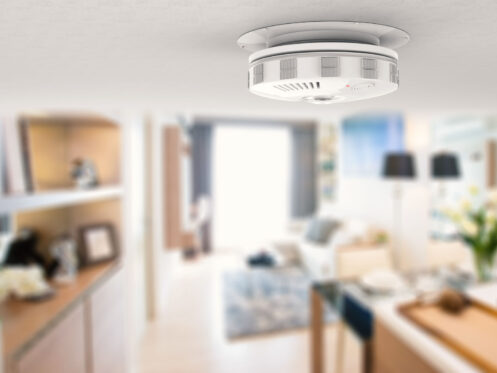
Carbon Monoxide Detectors are widely available in stores and you may want to consider buying one as a back-up – BUT NOT AS A REPLACEMENT for proper use and maintenance of your fuel-burning appliances. However, it is important for you to know that the technology of CO detectors is still developing, that there are several types on the market, and that they are not generally considered to be as reliable as the smoke detectors found in homes today. Some CO detectors have been laboratory-tested, and their performance varied. Some performed well, others failed to alarm even at very high CO levels, and still others alarmed even at very low levels that don’t pose any immediate health risk. And unlike a smoke detector, where you can easily confirm the cause of the alarm, CO is invisible and odorless, so it’s harder to tell if an alarm is false or a real emergency.
So What’s a Consumer to Do?
First, don’t let buying a CO detector lull you into a false sense of security. Preventing CO from becoming a problem in your home is better than relying on an alarm. Follow the checklist of DOs and DON’Ts above.
Second, if you shop for a CO detector, do some research on features and don’t select solely on the basis of cost. Non-governmental organizations such as Consumers Union (publisher of Consumer Reports), the American Gas Association, and Underwriters Laboratories (UL) can help you make an informed decision. Look for UL certification on any detector you purchase.
Carefully follow manufacturers’ instructions for its placement, use, and maintenance.
If the CO detector alarm goes off:
- Make sure it is your CO detector and not your smoke detector.
- Check to see if any member of the household is experiencing symptoms of poisoning.
- If they are, get them out of the house immediately and seek medical attention. Tell the doctor that you suspect CO poisoning.
- If no one is feeling symptoms, ventilate the home with fresh air, turn off all potential sources of CO — your oil or gas furnace, gas water heater, gas range and oven, gas dryer, gas or kerosene space heater and any vehicle or small engine.
- Have a qualified technician inspect your fuel-burning appliances and chimneys to make sure they are operating correctly and that there is nothing blocking the fumes from being vented out of the house.
Silver Creek AC Replacement
Last week, our installer, Jeff Dietz, replaced a customer’s outdated AC unit with a new Lennox Home Comfort System. This replacement was a part of a number of upgrades the customer did, including: garage heater, furnace replacement and hot water replacement.
Here are the before & after photos of the AC replacement:

‘ELLIS’ Furnace Replacement Photos
Yesterday, Waterbury installers replaced a furnace in a house on Ellis Road. The furnace is the original unit that was installed with the house many years ago. The owner decided that it was finally time to upgrade as the old unit just wasn’t holding it’s own lately.

‘Frederick’ Furnace & AC Replacement
Recently, our Waterbury Installers had the opportunity to replace both a furnace and an AC unit on Frederick. Check out the before & after pictures below.
FURNACE

AC UNIT

Solar Panel Install in Brandon, South Dakota
Recently Waterbury Heating & Cooling, Inc had the opportunity to install 2 brand new Solar Energy Panels for a brand new Amdahl Construction home in Brandon, SD. These 2 panels will help to make this home much more energy efficent. If you would like to learn more about Solar Home Energy Systems from Lennox, check out their website here.


Clover Furnace Replacement
Jeff Dietz Installed this great new furnace system in a customer’s home on Clover this week. Check out the before & after photos below.
Old System

New System